
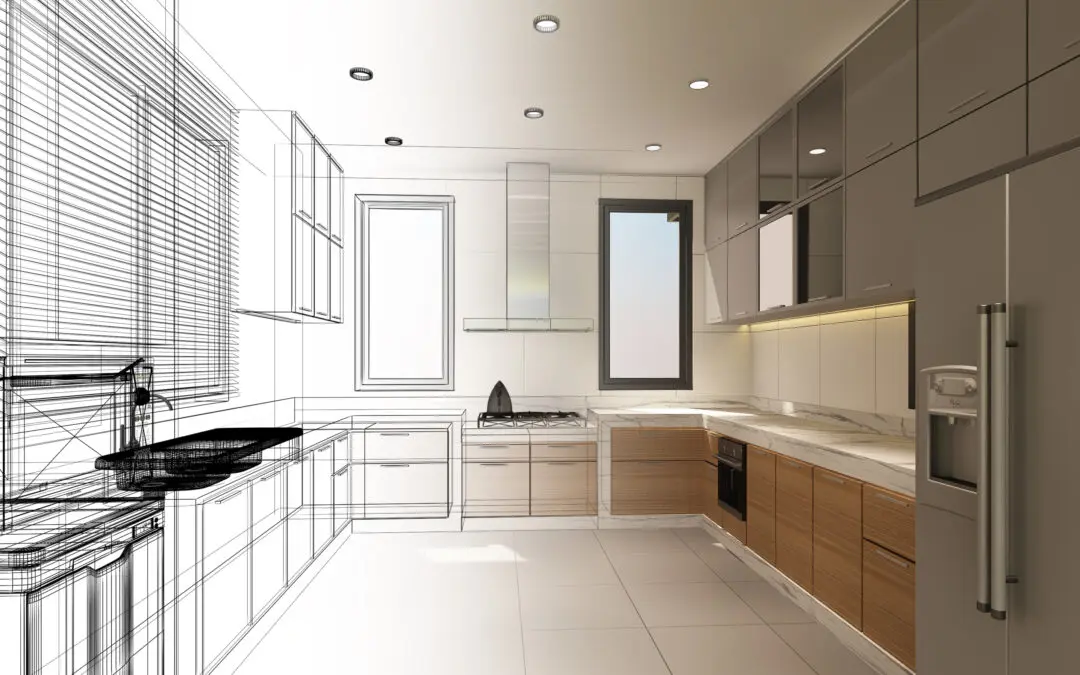
Kitchens and bathrooms are the two spaces that get the most daily use, influence home value the most, and generate the most renovation headaches. The reason is straightforward: both involve multiple trades, tight tolerances, and decision-making that cascades in every direction. Change the island footprint and you’ve affected cabinetry, plumbing rough-in, electrical, and traffic flow. Change the shower layout and you’ve affected drain location, tile sequencing, and ventilation. When design and construction are handled by separate teams, these interdependencies become friction—discovered late, resolved expensively. The Design-Build model is built for exactly this kind of project.
Why Kitchens and Bathrooms Are Particularly Suited to Design-Build
These rooms don’t have much margin for error. Cabinets are built to spec. Tile work requires a level substrate and accurate field measurements. Plumbing and electrical rough-in positions determine what’s possible when finish work begins—and moving them mid-project is disruptive and costly. In a traditional project, the designer draws the ideal version of the room. The contractor bids the work. The gap between those two documents tends to surface at the worst possible moment—after demolition, when the project can’t easily go backward. In a Design-Build engagement, the contractor’s knowledge is present during the design phase, which means the drawings reflect what can actually be built on time and on budget.
What a Kitchen Remodel Looks Like in a Design-Build Process
A typical Design-Build kitchen project moves through these stages in Greater Boston:
- Discovery and site documentation: We measure the existing layout in detail, assess plumbing and electrical configurations, check for any load-bearing conditions, and establish what’s staying versus what’s going.
- Layout and material development: We work through layout options with you—island vs. peninsula, sink placement, appliance configuration—and price each direction as we go. No surprises when the design is finalized.
- Cabinet, countertop, and finish selection: We guide selections toward options that are available within your timeline and fit within your budget. Every finish choice is priced before it’s committed.
- Trade coordination and sequencing: Demolition, rough plumbing, rough electrical, drywall, cabinet installation, countertop templating and fabrication, backsplash, appliance installation, and final trim—each phase is sequenced to minimize downtime and avoid rework.
- Punch list and final walkthrough: We don’t consider the project complete until you’ve walked through it with us and every open item is resolved.
What Makes a Bathroom Remodel Different
Bathrooms are smaller in square footage but often more complex per square foot. Wet zones require careful waterproofing, drain positioning determines tile layout, and ventilation directly affects long-term moisture performance. In a Design-Build engagement, these relationships are managed together rather than handed off between a designer who specifies and a contractor who builds. For a primary bath renovation, this typically includes:
- Shower and tub layout with waterproofing strategy determined before tile selection
- Vanity and fixture placement coordinated with plumbing rough-in, not assumed to be movable
- Heated floor, ventilation fan, and lighting planned as a system
- Tile selection with layout and grout joint decisions made in context of the actual room dimensions
For a guest or secondary bath, the scope may be simpler—but the same principle applies: the person selecting finishes should understand how they’ll be installed.
What to Expect on Timeline and Budget
A full Design-Build kitchen renovation in Greater Boston typically runs six to ten weeks from design finalization to completion, depending on scope, material lead times, and permit requirements. A primary bathroom remodel runs four to seven weeks. These ranges assume that selections are made on schedule and that structural or hidden conditions don’t require significant scope adjustments—which is why thorough site documentation before design is so important. On budget: the Design-Build model doesn’t make projects cost less. What it does is reduce the gap between the number you agree to and the number you pay. Change orders in renovations typically originate from design decisions that weren’t coordinated with the build—material substitutions, field condition surprises, or decisions deferred until the wrong moment. An integrated process catches most of these before they become line items.
What to Look for in a Design-Build Partner
Not every contractor who offers design services is operating a true Design-Build model. Worth asking:
- At what point in the process can you give me a fixed project cost?
- Who handles design if the person doing the work finds a problem with the drawings?
- Can I see examples of completed projects where you handled both design and construction?
- How do you manage material lead times and sequencing?
The answers tell you whether you’re working with a team that’s genuinely integrated or a contractor who subcontracts design and hopes for the best. At Samar Real Estate Solutions, we handle Design-Build kitchen and bathroom projects for homeowners throughout Greater Boston who want a reliable process and a finished result that looks the way it was intended. If you have a project in mind, request a free quote or call us at 617-780-5293. Browse our project portfolio to see completed renovations, and visit Our Services to learn more about our Design-Build offerings.