
Heavy rains come with summer storms in Greater Boston, and with them comes one of the most common—and costly—seasonal challenges for homeowners: basement moisture and water intrusion. Unlike dramatic flooding, seepage often sneaks in quietly, creating conditions for mold, structural decay, and damaged belongings before you even realize there’s a problem. The good news? Most water intrusion problems are preventable with straightforward, proactive maintenance. Let’s walk through the key steps to keep your basement dry this spring and beyond.
Start Outside: Foundation Grading and Drainage
Water flows downhill. If your grading slopes toward your foundation instead of away from it, rainwater will naturally move toward your house rather than away. Walk around your foundation after the next rain and check:
- Slope: The ground should descend at least 5–6 inches over the first 10 feet from your foundation. If it’s flat or dips toward the house, regrading—or building up landscaping—should be your first priority.
- Downspout runoff: Gutters are only half the solution. Downspouts should extend 4–6 feet away from the foundation and discharge water onto ground that slopes away. Short downspouts or ones that dump water right next to the foundation are a major culprit.
- Surface debris: Leaves and dirt plugging gutters and downspouts force water to back up and spill around the foundation. Clean gutters at least twice a year—spring and fall.
Inspect and Seal Visible Foundation Gaps
Even small cracks and gaps in your foundation can become water entry points. A spring inspection should include:
- Exterior cracks: Look for horizontal, vertical, or stair-step cracks in the foundation wall. Small hairline cracks can be sealed with concrete caulk; wider cracks may need professional repair.
- Band joist gaps: Where the rim band meets the foundation, gaps can develop over time. Seal these with low-expansion spray foam or caulk.
- Window wells: Basement window wells collect water. They should have a drain at the bottom or a cover to divert rain away, and they should slope inward to prevent water pooling against the window frame.
Test Your Sump Pump (or Install One)
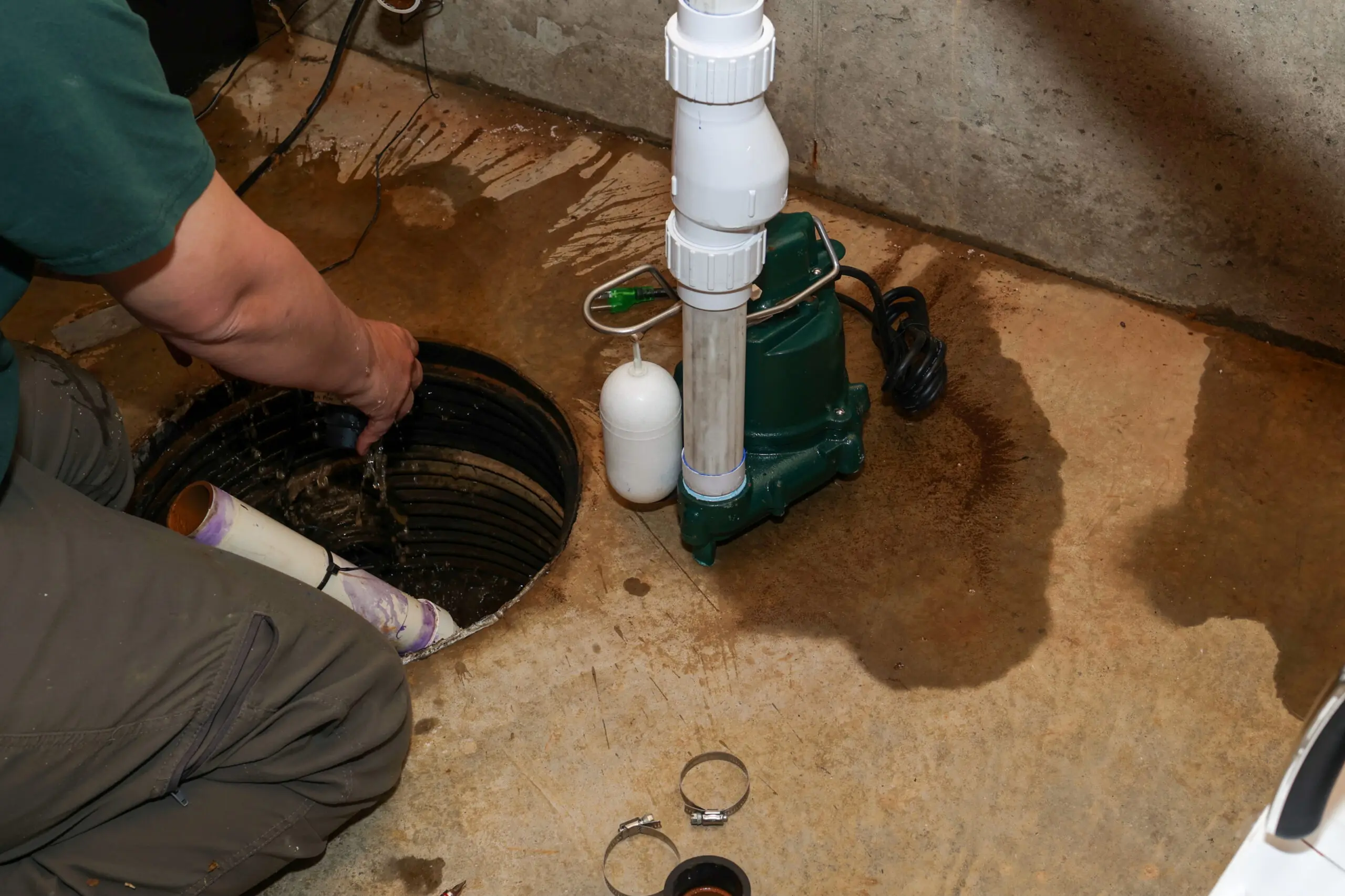
If your basement is prone to moisture, a sump pump is your safety net. Before spring rains hit, verify it works:
- Pour clean water into the sump pit until the pump activates. It should turn on smoothly and discharge water away from the foundation.
- Check the discharge line for kinks or damage, and make sure water exits away from the house.
- If you don’t have a sump pump and your basement stays damp, consider installing one.
Address Humidity and Ventilation
Even without active leaks, high humidity creates conditions for mold and musty odors. Improve basement ventilation by:
- Running a dehumidifier in spring and summer (aim for 30–50% humidity).
- Ensuring dryer vents and other exhaust fans discharge outside, not into the basement.
- Opening windows on dry days to circulate air.
Schedule Minor Repairs Early
If you spot any signs of moisture—water stains, soft spots, mold smell—don’t wait for spring rains to worsen the problem. Minor repairs now are far cheaper than major remediation later. A quick foundation assessment from a professional contractor can identify issues and prevent costly damage. Seasonal maintenance isn’t glamorous, but our team can handle foundation and moisture inspections to give you peace of mind before the wet season begins. Reach out for a free quote or call 617-780-5293 to schedule an inspection.